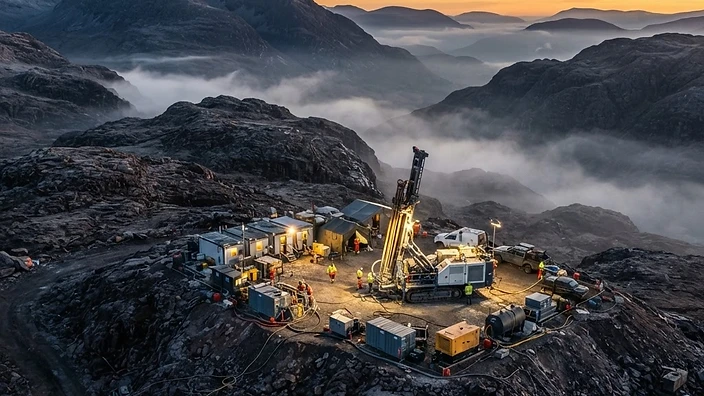
Global industry is experiencing a structural realignment driven by clean energy technologies, advanced manufacturing, and national security policies. At the epicenter of this transformation sits strategic minerals mining—the extraction and processing of raw materials essential to sovereign technological autonomy, decarbonization targets, and aerospace resilience. From battery metals like lithium, nickel, and cobalt to electrical infrastructure stalwarts such as copper and rare earth elements, securing resilient supply chains has moved from an operational procurement task to a board-level strategic priority.
Brazil occupies a prominent position in discussions surrounding resource diversification. Holding continental geology, an established mining tradition, and extensive underexplored crystalline basements, the country offers significant baseline resource potential. However, transforming natural geological endowments into operating strategic mines is fraught with complexity. Market participants frequently struggle to bridge the gap between high-level macro announcements and the nuanced ground reality of mining titles, environmental permitting, surface rights, and regulatory progression.
Executive Summary
- Strategic reclassification: Worldwide regulatory frameworks have elevated industrial minerals, critical battery elements, and rare earths into priority economic security assets.
- Substantial data universe: Across the Brazilian territory, 407,195 public records and 285,110 mining titles registered with the National Mining Agency (ANM/SIGMINE) represent the administrative baseline of geological exploration.
- Screening complexity: Of this extensive title volume, public records analyzed across all 27 federative units reveal that only a fraction—specifically 2,162 tracked opportunities identified under structured multi-factor observation—exhibit commercial and regulatory momentum.
- The isolation trap: Relying purely on single-metric indicators, such as raw title counts or reported surface area, obscures jurisdictional risks, tenure overlapping, and environmental overlaps.
The Foundations of Strategic Minerals Mining
The term strategic minerals mining differs fundamentally from traditional bulk commodity extraction like standard iron ore or thermal coal. Strategic commodities are defined not merely by traded volume, but by supply chain vulnerability, technological indispensability, and geographic concentration of refining capacity. Governments around the world—including the United States, the European Union, and regional powers across Latin America—maintain dynamic classifications reflecting these geopolitical risks.
For operators, financiers, and mineral economists, these classifications dictate access to specialized credit facilities, bilateral trade agreements, and accelerated permitting frameworks. In Brazil, strategic designations encompass materials critical to domestic infrastructure (such as phosphate and potassium for agricultural fertilizers) as well as those pivotal to the international energy transition. Tracking these assets requires exploring official minerals intelligence to grasp how exploration claims correspond with domestic regulatory guidelines.